

Older car wash bays can still have plenty of life left in them, particularly when the location, traffic flow, and building structure are strong. In many cases, the issue is not the bay itself but the equipment inside it. As customer expectations shift and technology improves, more owners are exploring a car wash retrofit instead of starting over with a full rebuild. Modern touchless systems can improve wash quality, reduce maintenance demands, and create a better customer experience without replacing the entire facility. We have helped operators across Western Canada evaluate retrofit options, and when the conditions are right, a touchless conversion can be a smart and practical path toward car wash modernization.
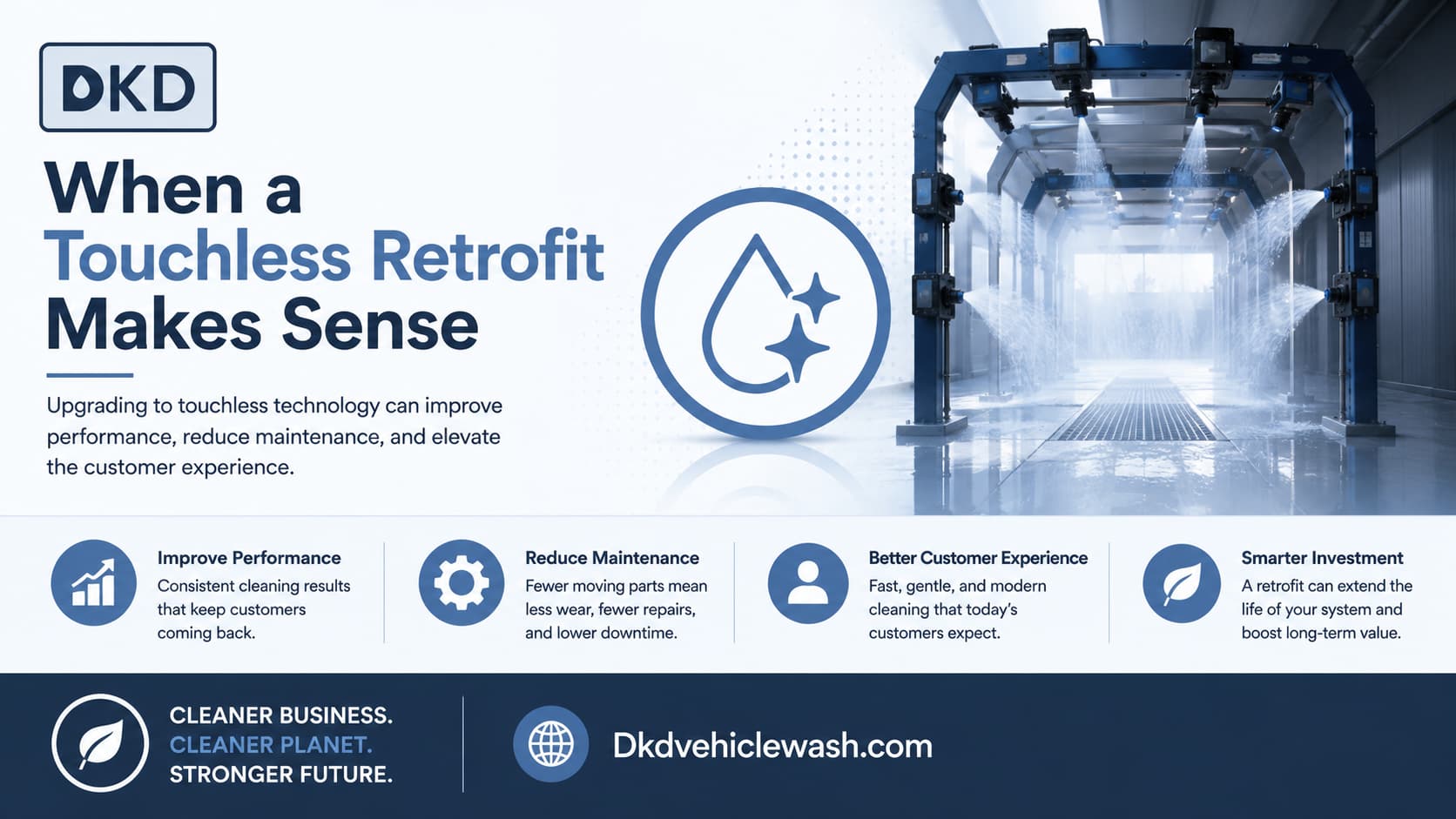
When a Touchless Retrofit Makes Sense
A retrofit often makes sense when the existing bay is structurally sound but the equipment is outdated, unreliable, or no longer meeting customer expectations. If wash quality has dropped, repair calls are becoming more frequent, or parts are harder to source, upgrading the equipment may deliver better long-term value than continuing to maintain an aging system.
A touchless conversion can also be a strong option for operators who want to reduce physical contact with vehicles. Many customers prefer touchless washing because it eliminates brushes and cloth materials touching the vehicle surface. This can be particularly appealing in markets with newer vehicles, luxury vehicles, or customers who are mindful of paint protection.
Retrofitting may also help increase overall efficiency. Modern touchless equipment often includes better sensors, improved spray coverage, advanced chemical delivery, and more capable control systems. These upgrades help operators improve consistency, reduce downtime, and offer a more competitive wash experience without relocating or rebuilding from the ground up.
Structural and System Considerations
Before any retrofit begins, the existing bay needs to be carefully assessed. Touchless systems require proper clearance, stable mounting points, reliable drainage, and adequate utility capacity. Bay width, ceiling height, wall condition, floor slope, and door operation all affect whether a retrofit is practical.
Electrical and plumbing systems are especially important. Modern touchless equipment may require an updated power supply, new control wiring, improved water flow, or upgraded chemical delivery lines. If the existing infrastructure is undersized or worn, those issues should be addressed before installation. Forcing new equipment into an unprepared bay leads to performance problems and unnecessary service calls down the road.
Climate also matters in BC and Alberta. A retrofit should account for insulation, freeze protection, ventilation, heating, and drainage. Older bays were not always designed for today’s equipment or current winter operating demands. Addressing these factors during the modernization process helps protect the new system and reduce downtime during colder months.
Cost, Replacement, and Real-World Retrofit Success
One of the primary reasons owners consider car wash modernization is cost. A retrofit can often be more affordable than a full replacement because the existing building, bay layout, and some infrastructure may still be usable. That said, the lowest upfront cost is not always the best measure. The more important question is whether the retrofit will deliver reliable performance, lower maintenance costs, and a better customer experience over time.
In some cases, a full replacement remains the better choice. If the bay has serious structural issues, poor drainage, inadequate utilities, or layout problems that limit performance, investing in new equipment alone may not resolve the underlying concerns. This is why a thorough assessment matters. A sound retrofit plan weighs the cost of upgrades against the long-term value of a full rebuild or replacement.
We have seen successful retrofits where older bays were transformed with modern touchless technology, upgraded controls, improved chemical systems, and better winter protection. In many cases, operators were able to refresh their wash offering, improve reliability, and extend the life of their facility without starting from scratch.
A car wash retrofit is not simply about installing new equipment. It is about ensuring the bay, utilities, climate protection, and technology all work together properly. If you are considering a touchless conversion or wondering whether your older bay is a good candidate for modernization, we are here to help assess your options and guide you toward a practical solution.
Learn More: Choosing Touchless Car Wash Equipment Built to Last
Frequently Asked Questions
When does a touchless retrofit make sense for an older car wash bay?
A retrofit makes sense when the existing bay is structurally sound but equipment is outdated, unreliable, or no longer meeting expectations, especially if wash quality has dropped or parts are hard to source.
What are the benefits of converting to a touchless system?
Many customers prefer touchless washing since it eliminates brushes and cloth touching the vehicle, which appeals to owners of newer or luxury vehicles who are mindful of paint protection.
What structural factors need to be assessed before a retrofit?
Bay width, ceiling height, wall condition, floor slope, door operation, proper clearance, stable mounting points, reliable drainage, and adequate utility capacity all need evaluation before installation.
Do electrical and plumbing systems need upgrades for a retrofit?
Often yes, modern touchless equipment may require an updated power supply, new control wiring, improved water flow, or upgraded chemical delivery lines if existing infrastructure is undersized or worn.
How does climate affect retrofit planning in BC and Alberta?
A retrofit should account for insulation, freeze protection, ventilation, heating, and drainage, since older bays weren’t always designed for today’s equipment or current winter operating demands.
Is a retrofit always cheaper than a full replacement?
Often, but not always—if the bay has serious structural issues, poor drainage, or layout problems limiting performance, a full replacement may better resolve the underlying concerns than upgrading equipment alone.

